

























Start to End RFID Tracking for Maximum Supply Chain Visibility
A Joint Perspective from FactorySense and TSC Auto ID Technologies
Introduction
This article explains how accurate tag verification, standards compliance, interoperable systems, and continuous chain of custody work together to create full supply chain visibility. It describes why cooperation among partners matters, how real time tracking answers critical operational questions, and how Factory Sense and TSC Auto ID Printers support organizations in building trusted end to end RFID programs.
This article expands on concepts from our previous collaboration about encoding in manufacturing environments. While proper encoding is the critical first step, true end to end visibility depends on shared standards, partner cooperation, and a consistent flow of high quality data.
Missed the first two articles? View them here.
Digital Identity: The Foundation of Traceability
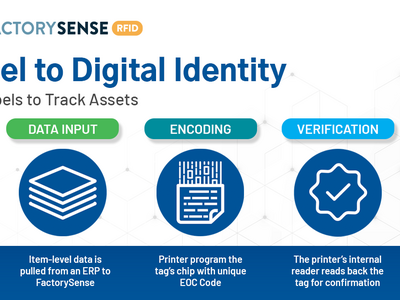
In modern supply chains, every shipment carries a “digital license plate” that must remain intact from the moment the label is printed to the moment it reaches its final destination. That digital identity is the foundation of operational visibility. It informs inventory systems, transportation partners, automated workflows, and customer expectations; Factory Sense and TSC Auto ID work together to support this entire lifecycle. Correctly printed and encoded RFID labels ensure that each item's digital identity is accurate and verified at the source, enabling consistent and reliable data as items move through warehouses, carriers, and customer facilities.
Tag Data Validation Revisited: Essential, But Only the Start
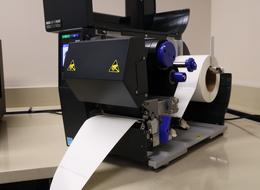
Validation of encoded tag data remains a critical early step in any RFID program. By validating the encoded data stored on the tag at the moment of printing, organizations ensure that the identifier in the chip matches the printed data and the record that will follow the item throughout its lifecycle. TSC Printers support this through their proprietary RTV™ (RFID Tag Validation) suite of functionalities that ensure the correct label is encoded with the correct data.
However, perfect verification does not guarantee downstream visibility. Once a tag leaves the facility, it enters environments where other partners must read, interpret, and forward that data correctly. If any participant uses a different encoding standard or handles exceptions inconsistently, information breaks down. Verification is foundational, but it must be followed by cooperation and standards alignment.
Cooperation & Standards Compliance Across the Supply Chain
A supply chain is a network of organizations with different roles, tools, and priorities. Manufacturers, distribution centers, carriers, third party logistics providers, and end customers all rely on the same encoded identifiers to maintain operational control. If one link in the chain uses a different encoding format or inconsistently places tags on cartons or pallets, visibility becomes unreliable.
Shared standards solve these problems by giving every participant a common structure for data. Standards-based EPC/UII “encoding schemes,” recommended tag placements, and approved media choices reduce unreadable events and ensure that data captured in one facility will function in another. In global operations, regulatory differences must also be respected. For example, some European countries restrict RAIN RFID (UHF passive) to the 865 to 868MHz band. North America uses 902 to 928MHz. A program that spans regions must account for these differences when selecting hardware and designing workflows.
FactorySense reinforces this alignment by ensuring that the digital identity behind each tag remains consistent and compliant with standards from GS1 EPC and ISO/IEC. As items move through different facilities using different systems, FactorySense checks that the encoded data and associated item record remain synchronized. This gives every partner a single source of truth without requiring manual reconciliation.
Interoperability: The Requirement for Scalable Visibility
Interoperability is the ability for equipment, software, and partners to exchange data without manual effort. In RFID programs, interoperability determines whether a tag generated in one environment will be readable – and meaningful – in another.
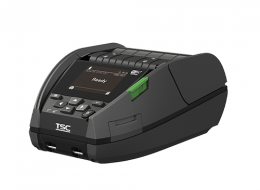
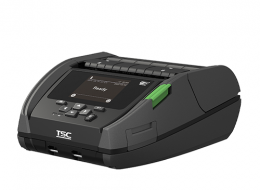
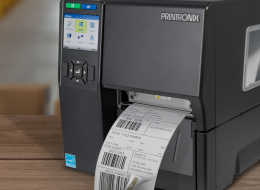
This starts with the hardware. RFID printers must produce encoding that is accurate, properly structured, and readable by downstream systems. TSC Printers provide reliability at this stage by supporting multiple connectivity options, a wide range of media types, and high-performance print and encode processes. This ensures that labels meet both physical and digital requirements.
Readers at each checkpoint must interpret the encoded structure correctly. Warehouse management systems and transportation management systems must ingest the information without modification. Finally, receiving organizations must be able to use the data immediately without manual intervention.
FactorySense connects these layers by translating raw read events into structured information that can be consumed by enterprise systems. When the printers and data platform function together, adding new facilities or partners becomes much simpler. The program scales on top of trusted, standardized identifiers.
Maintaining a Continuous Chain of Custody
A continuous chain of custody records each point an item passes through. It notes where the item was, when it moved, and who handled it. This historical trail is valuable for compliance, quality control, customer transparency, and risk reduction.
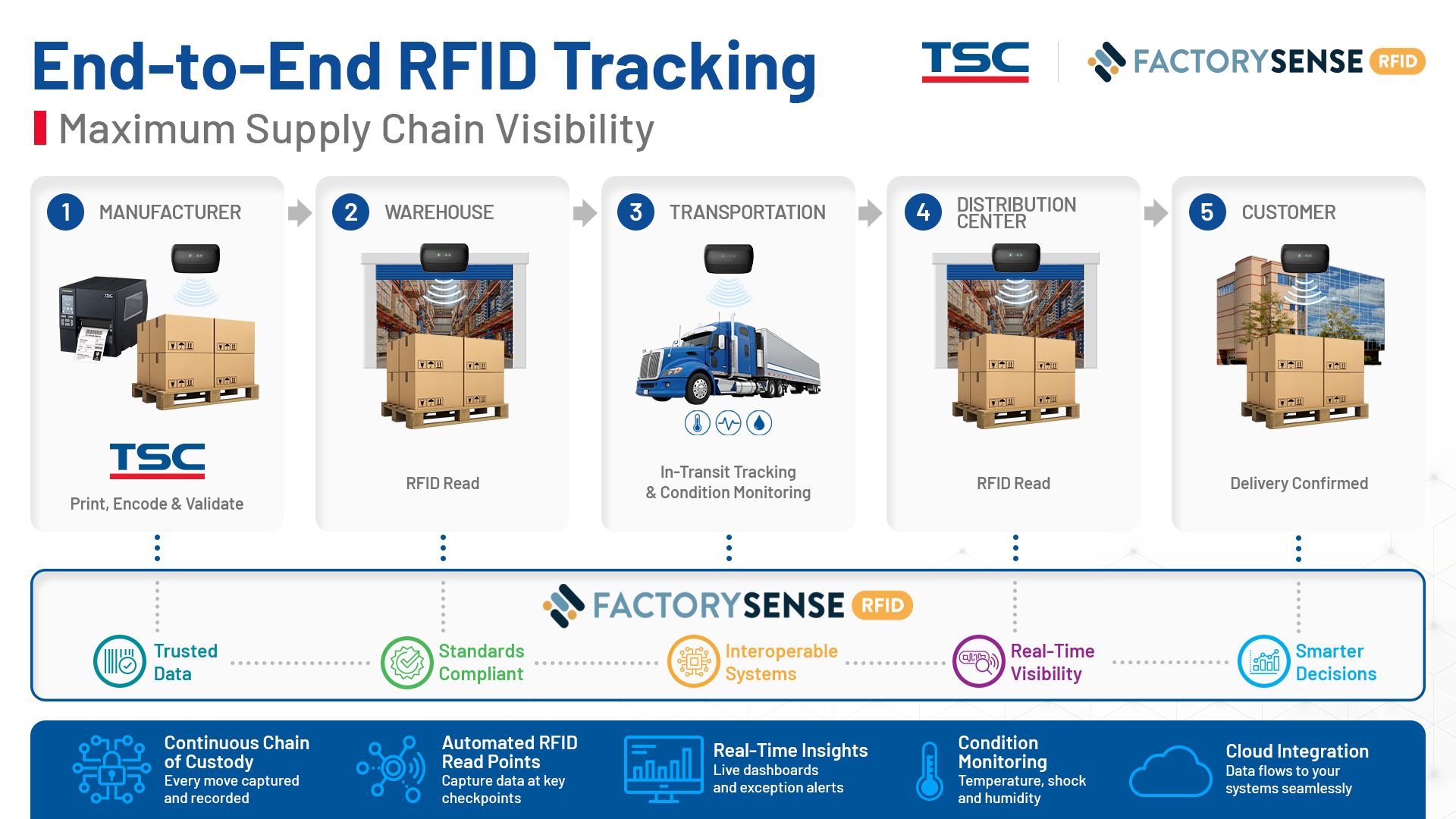
Creating a reliable chain of custody requires strategically placed read points at receiving areas, staging zones, dock doors, conveyors, and handoff locations. The more precise the read events, the more accurate the movement history becomes. FactorySense RFID and RTLS Software gather these events and build a timeline that shows how goods move through the operation. This helps teams identify bottlenecks, verify handling accuracy, and provide customers with reliable updates.
Tracing Shipments Across Their Entire Journey
Once a shipment leaves a facility, visibility must continue through transportation. RFID enables this by capturing read events at waypoints such as transfer hubs, cross docking locations, and receiving docks. When supported by consistent tagging and interoperable readers, this creates a near real-time picture of movement.
Different tag types support different use cases. Passive tags are cost effective and suitable for high volume supply chain applications. Active and battery assisted passive tags support longer ranges or additional sensor readings. RAIN RFID (UHF passive) remains the most common option due to its long range, low cost, and strong performance in logistics environments.
With consistent read events, organizations can answer important operational questions. If a shipment has not moved for several hours, the system shows the last known location. If it is moving ahead of schedule, that trend is visible. If it deviates from its expected route, the system flags the divergence and enables corrective action. FactorySense converts these events into actionable insights so that teams can make decisions without relying on calls or guesswork.
It's 10 P.M. Do You Know Where Your Shipments Are?
Visibility is often most valuable at the moments when information is hardest to obtain. Late in the day, when staffing is lighter and communication slows, RFID based tracking provides clarity.
Where is it?
A quick system check reveals the last confirmed scan and the associated timestamp. This eliminates guesswork and gives teams an immediate understanding of whether the shipment is moving, waiting, or delayed.
What happens if it is diverted?
A diverted shipment affects production schedules, customer timelines, and inventory planning. With clear visibility, organizations can see the impact immediately. Safety stock may be deployed, or customers may receive updated expectations based on real data rather than assumptions.
Is it still within allowed condition limits?
For temperature sensitive or fragile goods, location alone is not enough. Modern RFID tags can capture temperature, humidity, shock, or light exposure. If a shipment experiences a temperature excursion or physical impact, the system alerts the team. This allows quality checks or interventions before customers receive compromised goods.
This combination of location and condition information turns RFID into a quality assurance tool in addition to a tracking system.
Additional Reasons to Strengthen Tracing and Condition Monitoring
End to end RFID data supports more than basic logistics. Serialized tracking helps organizations manage warranties, recalls, and reverse logistics. Complete movement histories reduce theft and loss because they document the last known point of visibility. Supplier performance becomes measurable because dwell time and handling accuracy become clear.
In healthcare, manufacturing, and distribution, RFID improves workflow efficiency by automating identification and reducing manual scanning. Reliable equipment such as RFID readers and printers ensures that these improvements scale with operational growth.
Internally, the data strengthens planning, supports audit readiness, and reduces the need for manual reconciliation. When every item has a trusted digital identity and a documented journey, operations become more predictable, more efficient, and easier to optimize when combining FactorySense RFID and TSC Printers. As said by Chris Brown from TSC, “We love working with FactorySense because they bring our printers and other hardware together with software and consulting support in one holistic package that delivers reliable supply chain tracking. This saves both money and time, the most valuable resources for any operation.”
Conclusion
Start to end RFID tracking is most effective when supported by accurate encoding, shared standards, cooperative partners, and reliable data integration. TSC printers deliver the print and encode accuracy needed at the beginning of the process. FactorySense ensures that the data behind each tag remains consistent and traceable as it moves through facilities, transportation networks, and customer locations.
Together, these systems create a continuous, trusted visibility network. Organizations gain the ability to see where every shipment is, understand its condition, and trace its history from the first label to the final delivery. This combination of physical accuracy and digital intelligence makes modern supply chains more resilient, transparent, and prepared for future growth.